

In The Roottrees are Dead, a useful note connects a claim to the evidence that supports it. Start with one unresolved relationship, write down where the clue came from, and keep a tentative identification separate from something you can actually establish.
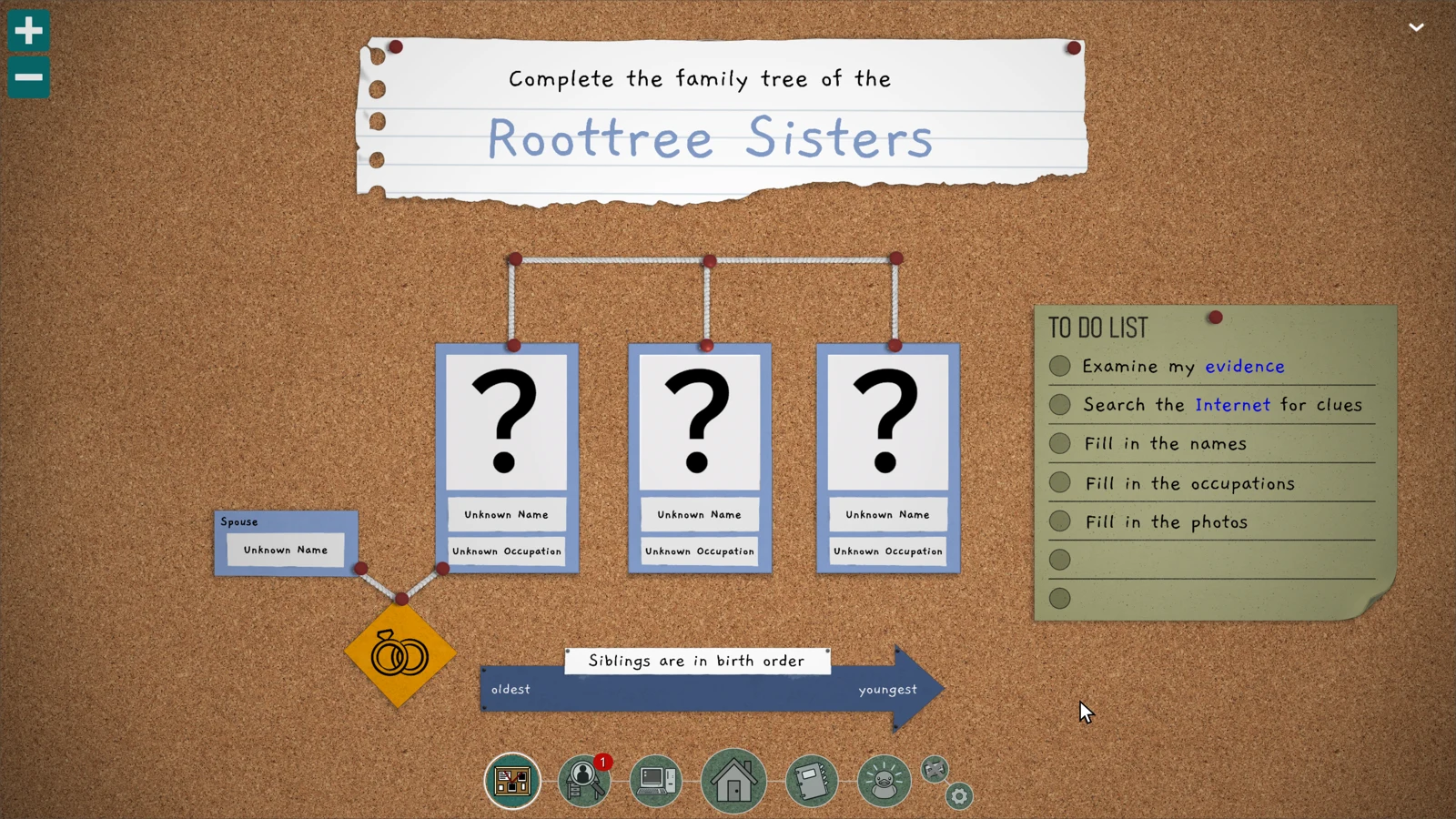
The game’s official description sets up a genealogical investigation using an imagined late-1990s internet, photographs, books and articles. This guide suggests a way to organize that investigation. It does not reveal names that belong in the tree or provide a solved family chart.
1. Choose one question before searching
Instead of trying to identify everybody at once, choose a question you can state in one sentence: “Which document links this person to this branch?” is useful because a new clue can answer it. “Who is everyone?” gives every new name equal weight and quickly produces an unreadable notebook.
I would start with the strongest written connection already available, then work outward. A photograph can suggest a lead, but I would change my guess if a dated source or an explicit relationship contradicted it. That keeps resemblance from silently turning into proof.
2. Keep a small evidence log
Use one row per claim, rather than one long paragraph per browsing session. Record the source in enough detail to reopen it. A note that says “seen somewhere” makes the next session start with the same search again.
| Field | What to record | Why it helps |
|---|---|---|
| Question | The one identity or relationship being checked | Keeps the search bounded |
| Source | Document title or place you found the clue | Lets you revisit the evidence |
| Observation | What the source actually states | Separates reading from interpretation |
| Inference | Your proposed connection, marked tentative | Leaves room to revise it |
| Next check | A second source or conflicting detail to inspect | Gives the next session a starting point |
3. Test a connection before expanding it
Here is an invented practice example, unrelated to the game’s solution. A magazine names Rowan as the founder of a business; a photograph labels someone only as “R. Vale.” Those details make a possible lead, not a confirmed match. Your next question is whether another source connects the full name, photograph and relevant date.
Write the uncertainty beside the proposed match. If you build five other assumptions on top of it, discovering one mistake later becomes much harder. When new evidence conflicts, revisit the earliest unsupported link first.
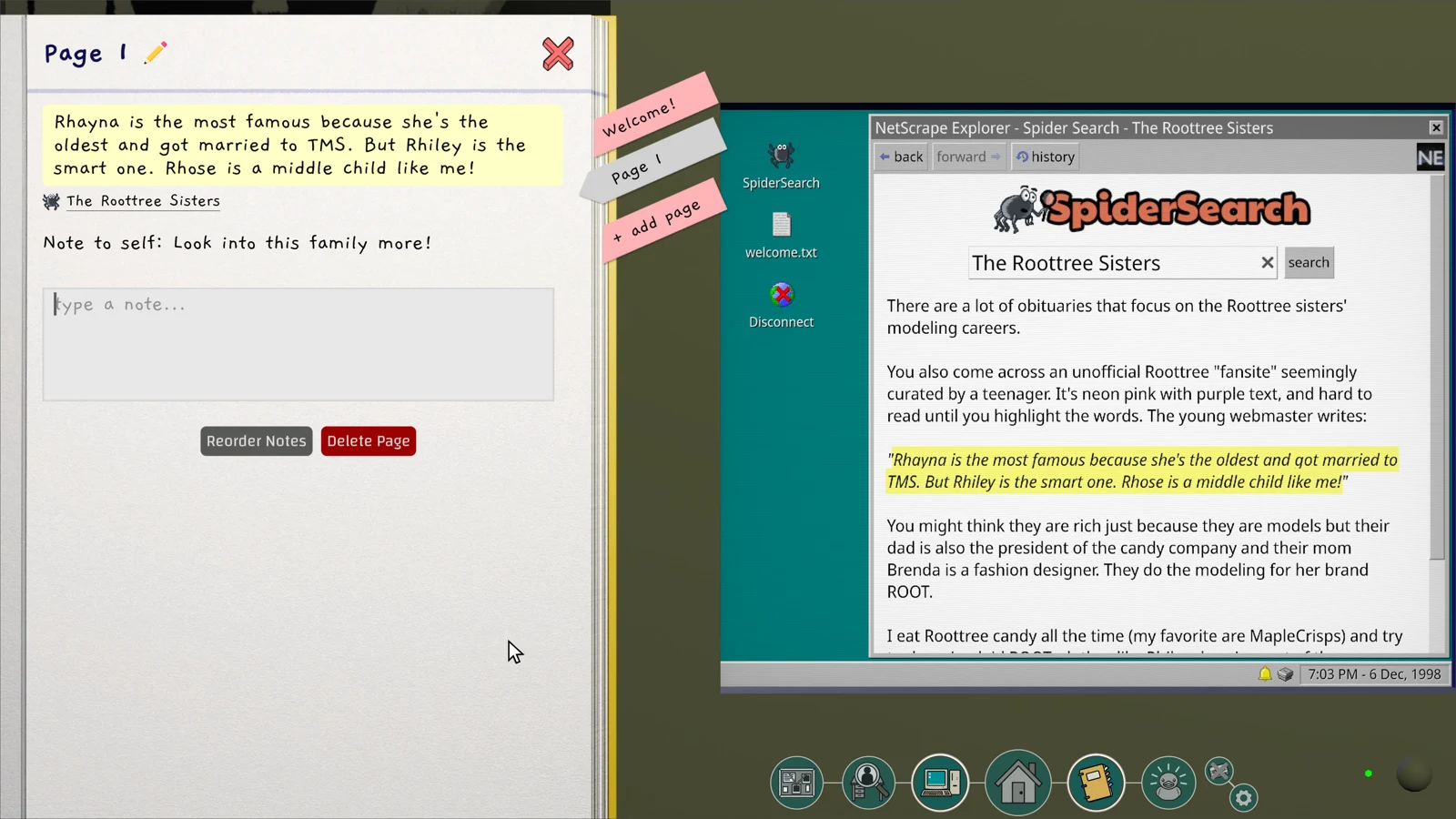
Show the notebook screenshot (contains early-game clues)
4. Get unstuck without reading the answer
- Read your current question and remove guesses that have no source.
- Reopen the strongest clue and check the exact spelling of names or organizations.
- Review what the clue establishes about time and relationships.
- Look for one unresolved connection that would distinguish two candidates.
- After a new discovery, update the old row instead of leaving contradictory notes side by side.
If you decide to consult a hint, keep the question narrow. Asking where to investigate preserves more of the deduction than opening a completed tree. Official promotional screenshots can also contain visible clues; avoid enlarging them if you want to encounter every detail yourself.
Before your next session
Leave three short lines: the question you are working on, the strongest source, and the next check. The aim is to resume the investigation without retracing your whole evening. A larger notebook only helps if it makes a specific clue easier to find.
Sources and related reading
Official developer/publisher store listing and screenshots. Game facts checked October 27, 2026. Practical note-taking and practice suggestions above are editorial recommendations.
Related: Sorcery! Beginner Guide: Read Combat Clues and Choose Spells.
Screenshot source: official press materials or licensed image record.
Official screenshots supplied in the Evil Trout press kit. © Evil Trout.
Comments