
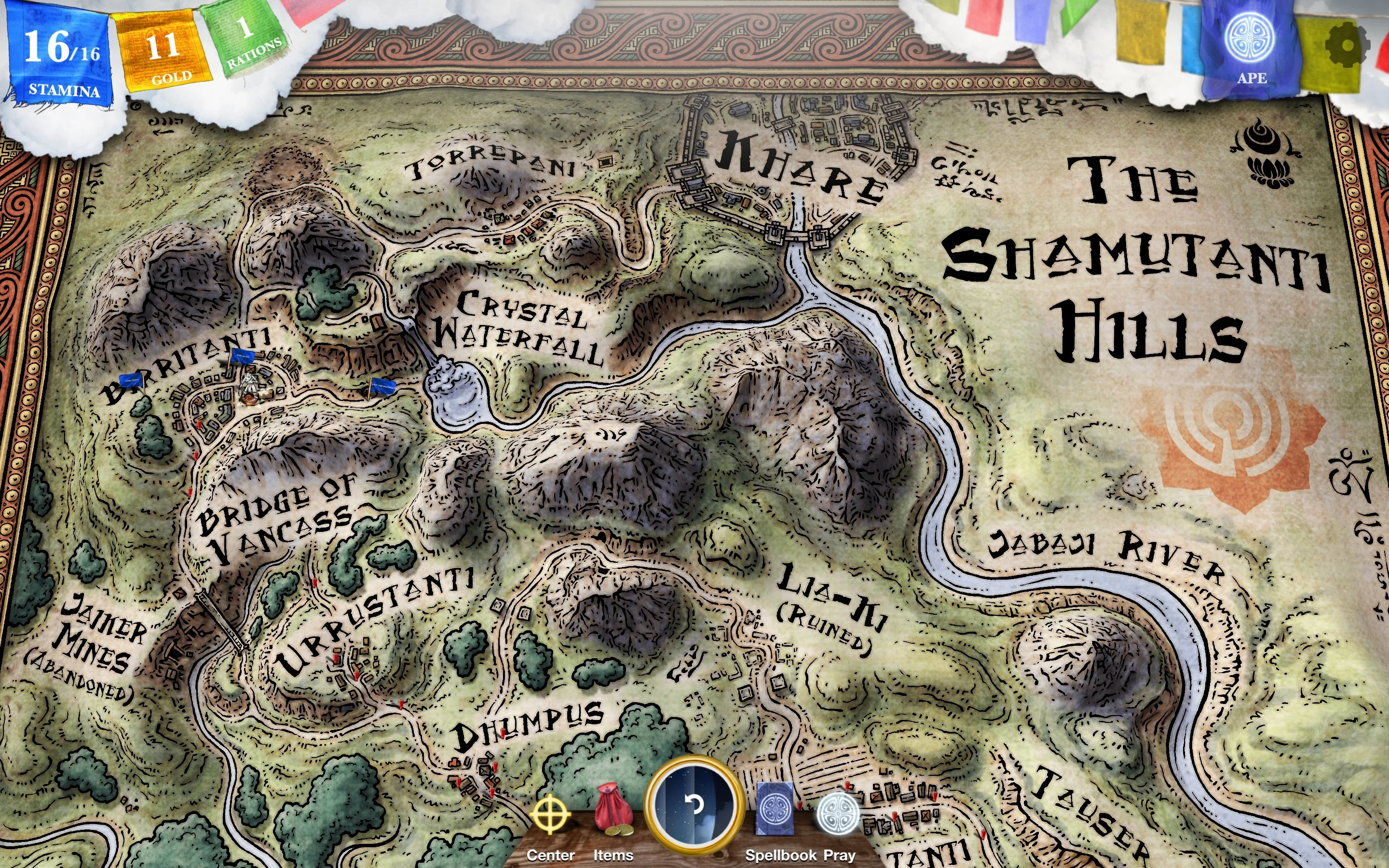
Sorcery! asks you to read an encounter before choosing how to handle it. A fight, a conversation and a spell can lead to different consequences. Start with the words describing the situation: they may give you a better reason for your next action than the most dramatic option on the screen.
Inkle’s official introduction describes a four-part fantasy adventure with branching choices, sword duels and magic. This beginner guide explains how to approach those decisions without revealing a route through the story or a puzzle solution. The screenshots show the desktop edition of Parts 1 and 2.
Start with the first part if you want the whole journey
The official press kit says the parts can be played separately or connected, carrying consequences across the series. I recommend beginning with Part 1 if your interest is following one adventurer’s decisions through the story. If you already know the earlier chapters, a later part can be a reasonable starting point, but read its setup carefully.
Check the exact product before buying. The developer’s links distinguish the combined desktop Parts 1 and 2, individual mobile parts and the console Complete Collection. Names and packaging matter more here than a generic search for “Sorcery download.” Use the official links to check the version for your device.
Read the encounter before choosing the tactic
Pause long enough to identify what you know. Is the other character threatening you, asking for something or merely standing in your way? Is a statement confirmed by the narration or something a character claims? Your interpretation may be wrong, but it should have a reason.
| Decision | Read first | Useful question |
|---|---|---|
| Choose a route | The current location and available paths | What am I hoping to learn or reach? |
| Answer a character | Their exact claim and the offered replies | Am I trusting information or making an assumption? |
| Fight | The opponent’s described behaviour | What does the text suggest about the next exchange? |
| Use magic | The spell’s description and current requirements | Does this effect address this particular problem? |
Pay attention to the duel’s narration
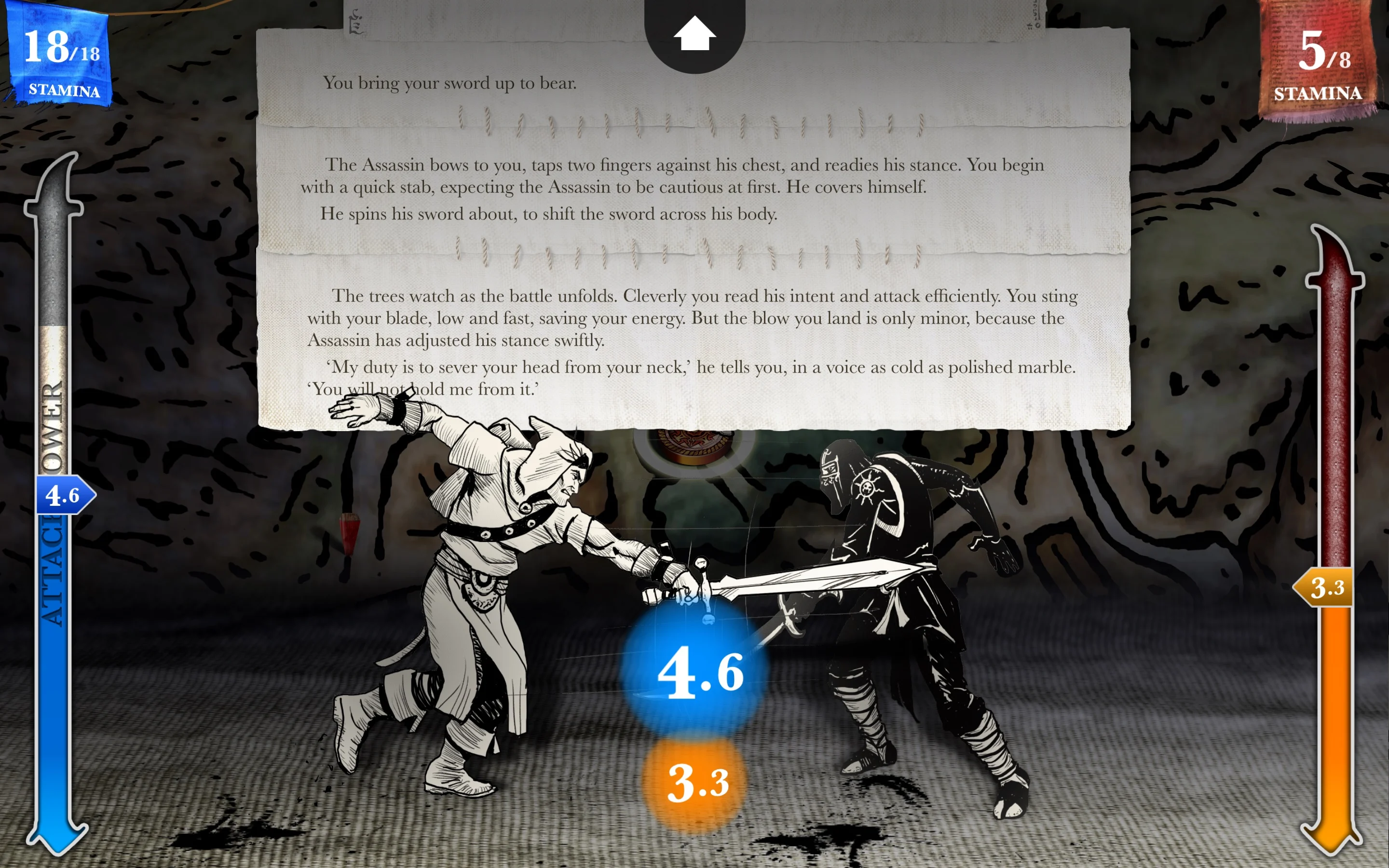
The official game description specifically points to learning enemies’ weaknesses and tells. After an exchange, read what happened before repeating the same approach. A strategy that worked against one opponent may have depended on that opponent’s behaviour.
I would spend a few encounters learning to connect a description with an outcome before trying to optimise every fight. If you already recognise the opponent’s pattern, quicker choices make sense. Otherwise, rushing removes the evidence you need to understand why an exchange went badly.
Treat a spell as a proposed solution
The game offers a large spell repertoire. You do not need to memorise every effect before making the first choice. Read the information available in your edition, then ask whether the spell would change the obstacle you are actually facing. Check any stated requirements before relying on it.
For an invented example, imagine that a passage is blocked and you have a choice between an effect that reveals information and one that changes an object. Which helps depends on whether you understand the obstruction. This is a reasoning exercise, not a spell combination or encounter from the game.
Keep a short record of uncertain choices
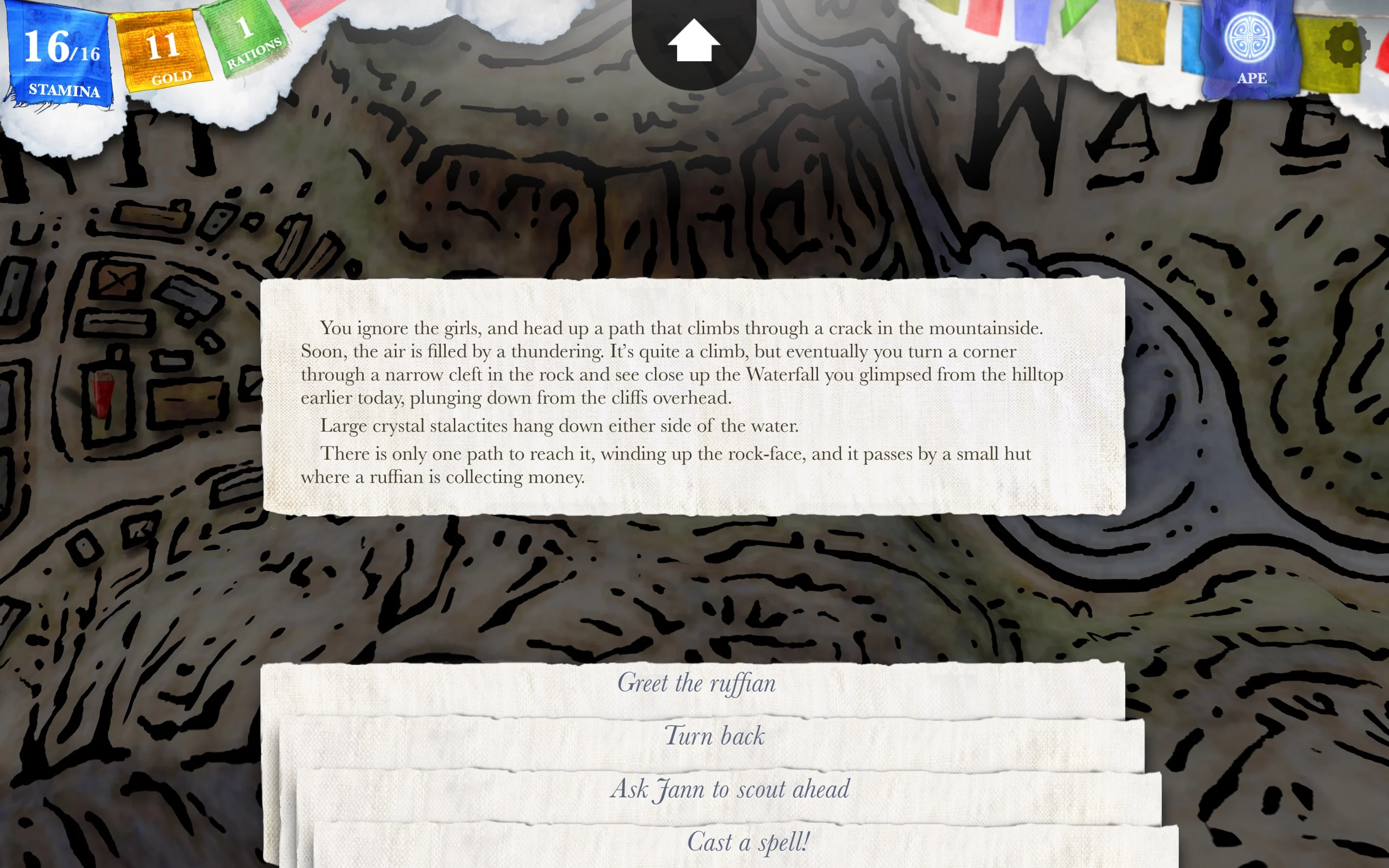
A useful note needs only the location, your choice and the question it leaves open. “I trusted the stranger; check whether that information proves reliable” is enough. Avoid writing a full transcript: the purpose is to remember the decision you may want to reconsider.
When a later scene refers to an earlier action, connect the two cautiously. A consequence explicitly described by the game is stronger evidence than two events merely occurring in sequence. Keeping that distinction makes a replay more informative.
Give the next attempt one purpose
If you start another journey, choose one kind of decision to examine more closely. You might follow an unfamiliar path or read a recurring encounter differently. Changing every choice at once creates a new story, but makes individual consequences harder to compare.
Our 80 Days route-planning guide discusses another inkle adventure where a deliberate detour can be worth taking. In Sorcery!, the most useful beginner habit is to know why you chose an option, then stay curious about what the story actually confirms.
Official promotional screenshot. Copyright remains with the developer.
Comments