
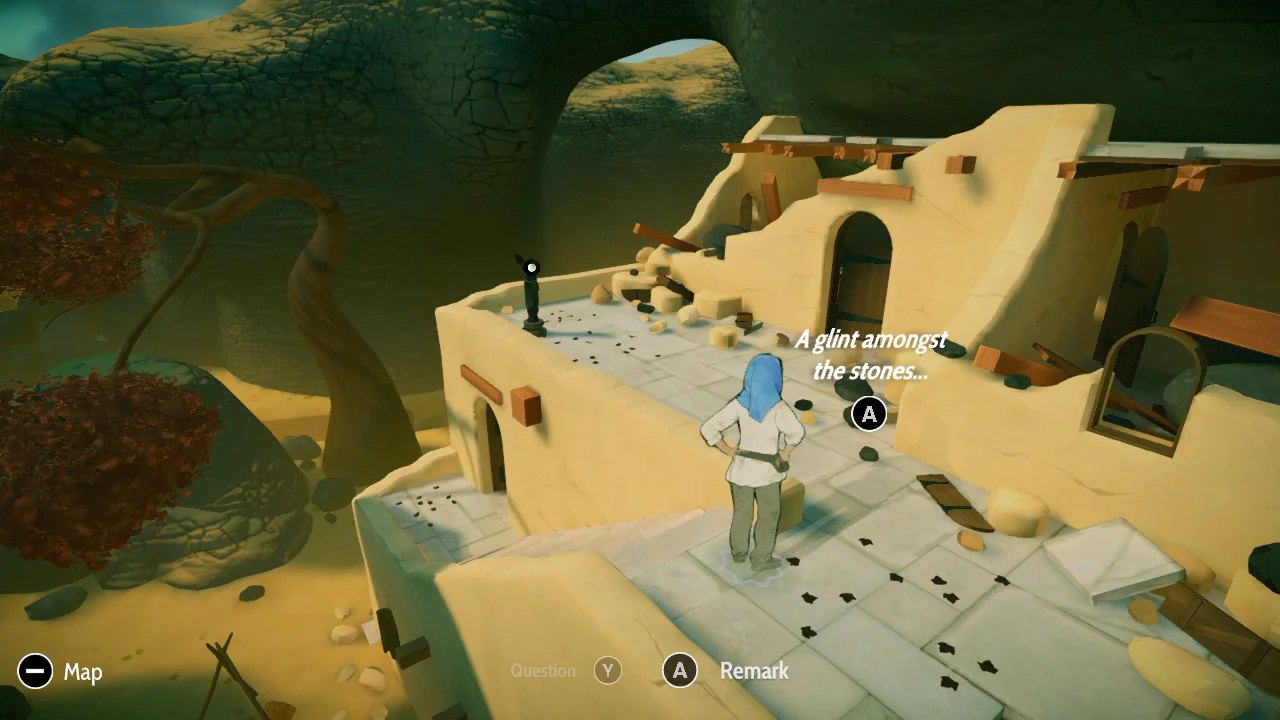
To translate inscriptions in Heaven’s Vault, compare a proposed meaning with the other places you have seen the same signs. A plausible sentence is a starting point. Keep looking for another context that supports it before treating the translation as settled.
Inkle’s official game description explains that translations affect the story and that a wrong interpretation can send Aliya down the wrong track. This spoiler-light guide suggests a way to reason through that uncertainty without copying a dictionary of answers.
Read the object before choosing the words
Start with where the inscription appears. A label, a monument and a portable object could serve different purposes. Context does not prove a translation, but it helps you ask a better question than “Which option sounds nicest?”
I recommend keeping a short note of the object and your reason for choosing a word. If a later inscription makes that reason look weak, change the interpretation. The useful part of the note is the evidence, not a commitment to your first guess.
| What you have | What to compare | What to avoid |
|---|---|---|
| A familiar-looking sign | The full word and its surrounding inscription | Assuming similar shapes always have identical meanings |
| A convincing sentence | Whether its words fit other examples | Accepting it only because it reads smoothly |
| An object with a clear use | What the text might label, describe or commemorate | Treating the object’s use as proof of every word |
| Conflicting interpretations | The evidence behind each interpretation | Changing every word at once |
Use related words as a clue
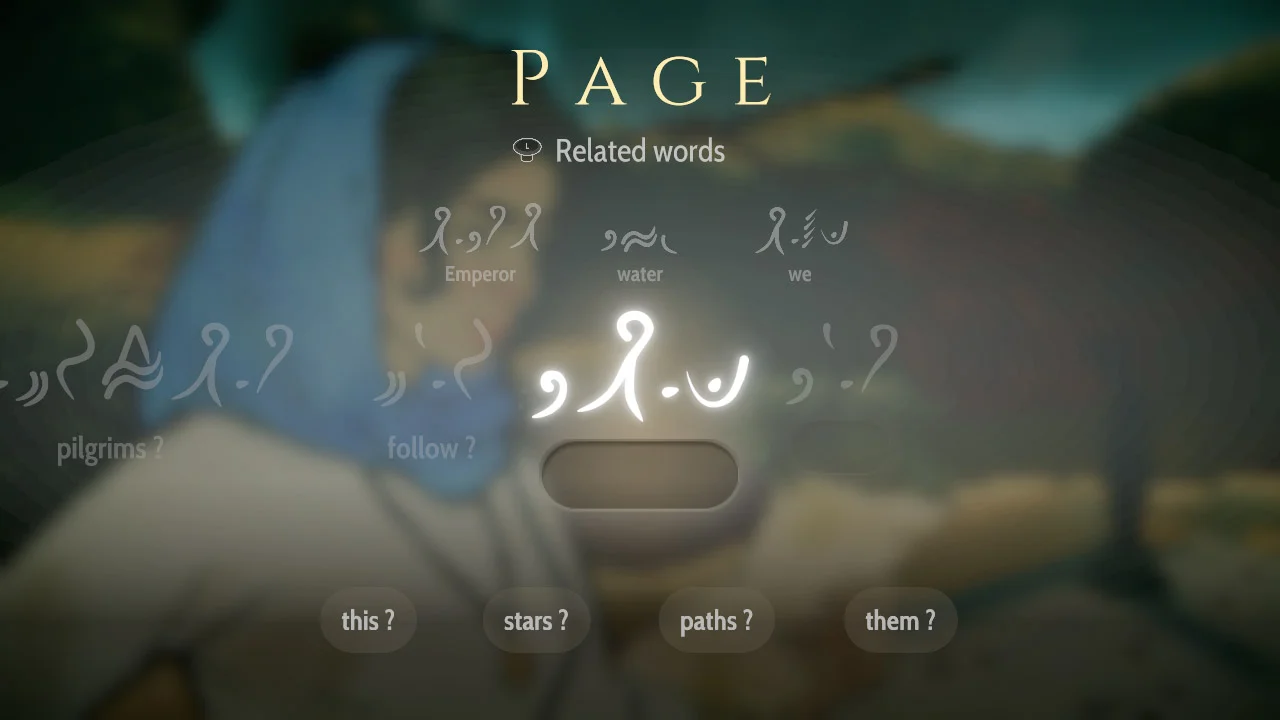
The developer describes words formed from smaller components. Look for repeated parts, then ask whether a proposed relationship makes sense across the examples you have. A repeated shape is worth noticing even when you cannot yet name it.
For an invented example, suppose two inscriptions on different containers share part of a word. That could suggest a relationship, but “both containers hold water” is still only one explanation. Perhaps the shared element describes ownership, origin or material. This is a practice exercise, not a solution to an inscription in the game.
A five-step translation routine
- Inspect the context. Note the object, location and any relevant conversation.
- Find the familiar parts. Separate signs you recognise from signs you are guessing about.
- Choose a working interpretation. Explain to yourself why it fits this particular inscription.
- Compare another example. Look for support or a contradiction rather than merely repeating the guess.
- Keep the uncertainty visible. A question mark in a personal note is enough. Do not turn an unresolved choice into a confirmed fact.
Let conversation challenge your reading
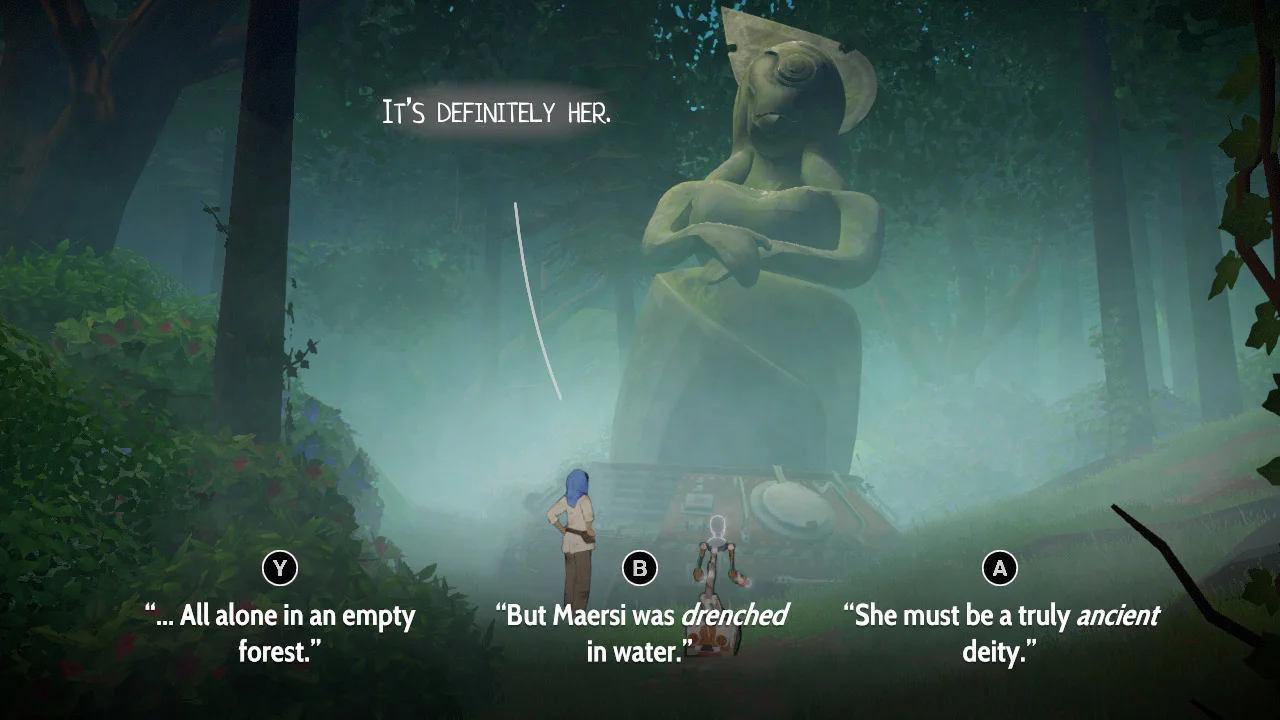
Listen to what characters say about a place, but distinguish their claims from what you can directly observe. Inkle notes that characters remember your actions and that some may try to mislead you. An appealing explanation can therefore deserve another check.
There is no need to transcribe every exchange. Record one useful claim and the question it raises. If the note grows longer than the inscription you are trying to understand, shorten it before moving on.
When to use a hint
I would continue exploring while I still have a concrete lead to compare. If I am repeatedly choosing between the same words without finding anything new, a limited hint can help. Search for the specific inscription or location and stop reading as soon as you have a next action.
That recommendation changes if discovery is the main pleasure for you: leave the question open and follow another lead instead. The game’s adaptive narrative is designed around your path, so a guide should not imply there is one mandatory sequence for every player.
Our Chants of Sennaar notebook guide offers another way to keep evidence beside a tentative translation. Images here are real Nintendo Switch screenshots from inkle’s official press kit; platform controls can differ.
Official promotional screenshot. Copyright remains with the developer.
Comments