
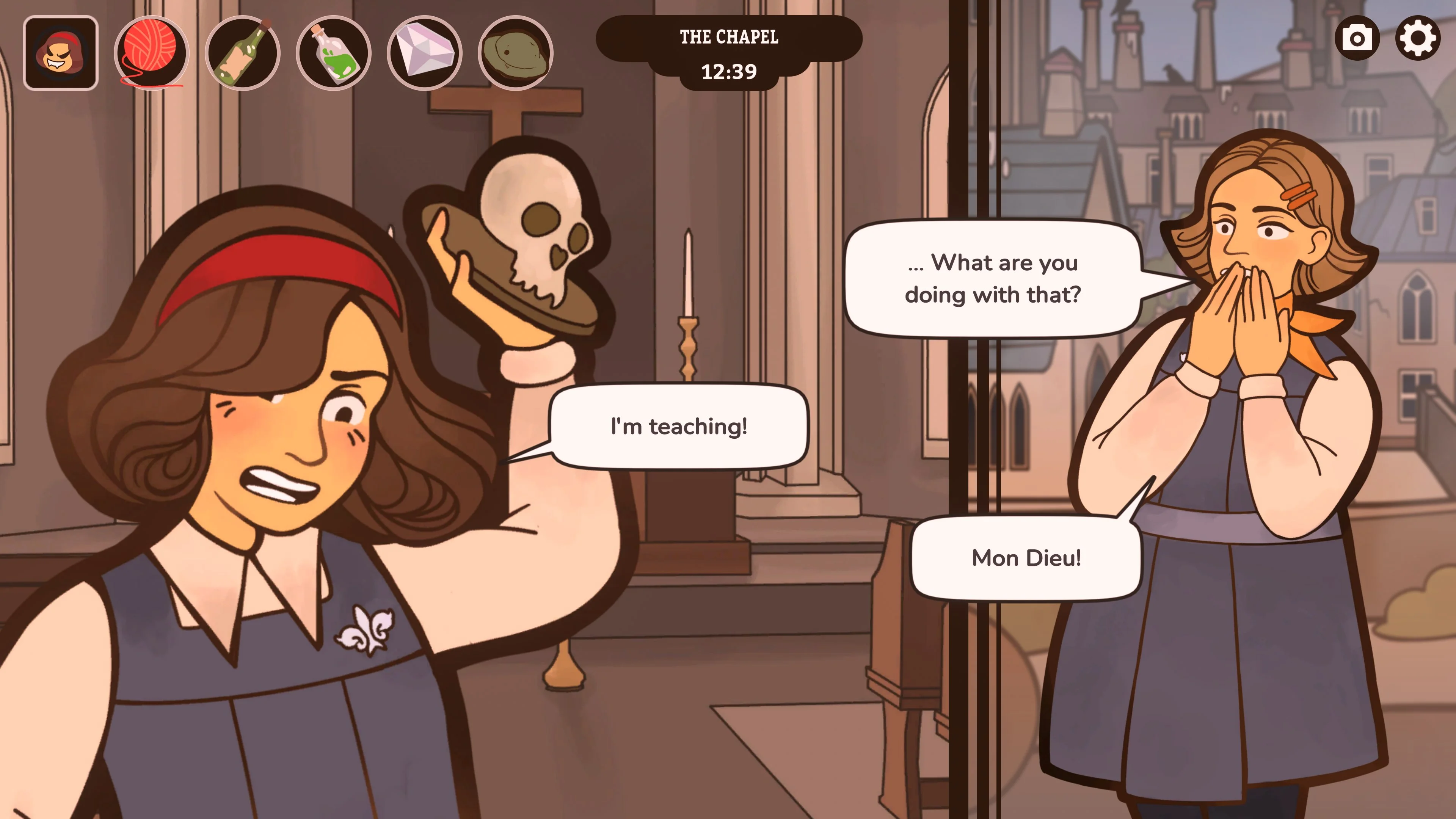
In Expelled!, a useful first-day plan starts with one question: who can contradict the accusation against you? Write down a person, a place and what you actually learned there. That gives your next conversation a purpose, even when the school is full of tempting distractions.
Inkle’s official description casts you as Verity Amersham, a pupil blamed after a prefect falls from a window. You have one school day to avoid expulsion. This guide suggests a way to organise evidence without revealing a solution or pretending there is one universally correct conversation route.
Start with a small evidence sheet
I would use three columns: observed, claimed and still unknown. Keeping those categories separate prevents a confident accusation from quietly becoming a fact in your notes. If you prefer an unplanned first run, leave the sheet until the end and record only the questions you want to investigate next.
| Note type | What belongs here | Useful next question |
|---|---|---|
| Observed | A place visited, an object examined or a conversation you witnessed | Who else could have seen it? |
| Claimed | Something another character tells Verity | What would independently support it? |
| Unknown | A missing explanation or an untested connection | Which person or location could answer this? |
| Your action | What you chose to say or do | Who was present, and what changed afterward? |
Read the scene before choosing a response
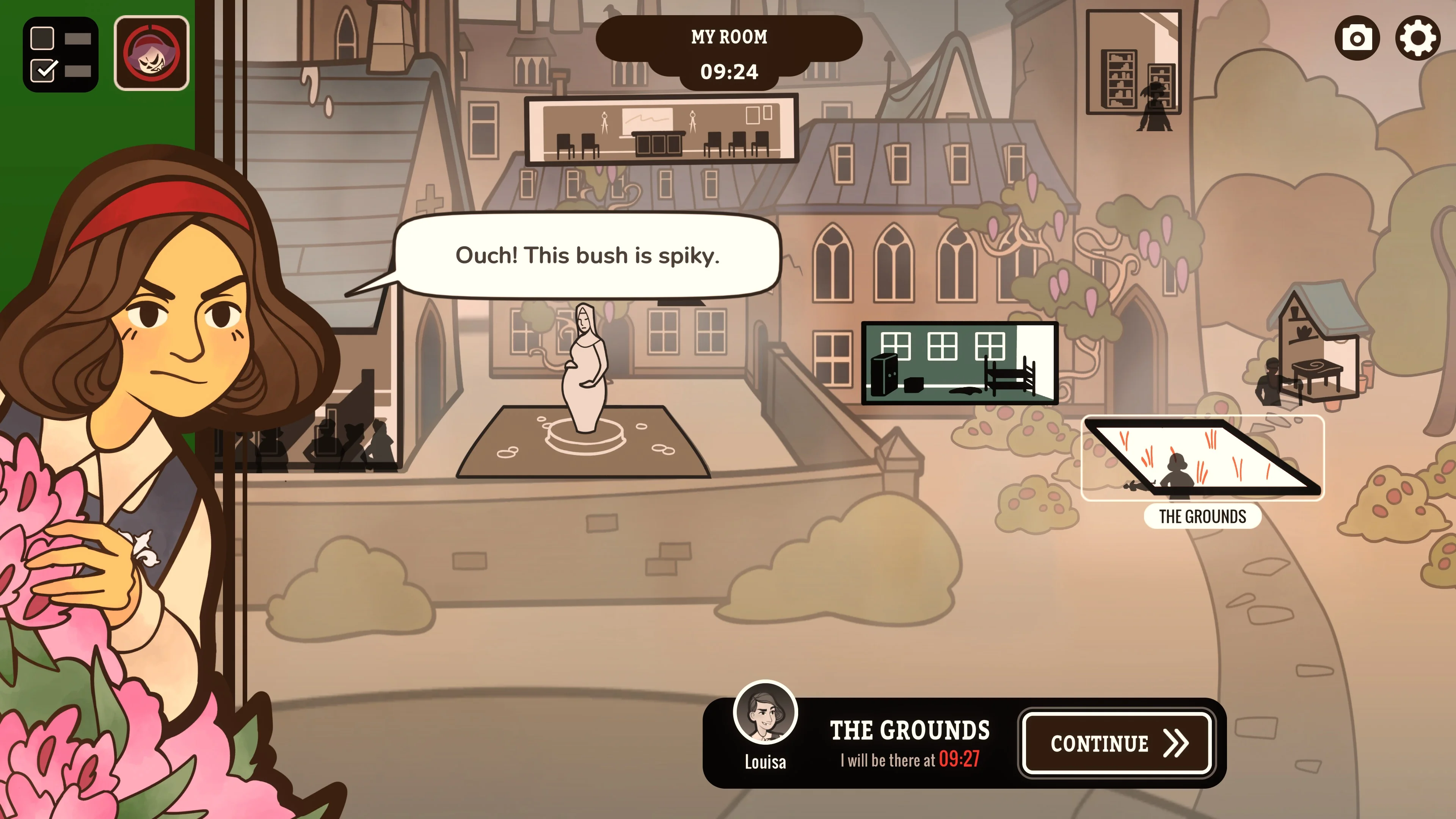
Look at the displayed location and time, the people present and the available responses. A line can sound convincing in isolation while being a poor fit for its audience. Before selecting it, decide what you want from that particular exchange: information, cooperation or a response to an accusation.
The developer explains that characters move independently and remember what they see and hear. That makes the audience worth recording. A private conversation and the same subject raised in front of another pupil are different situations; avoid assuming that a memorised sentence will always have the same effect.
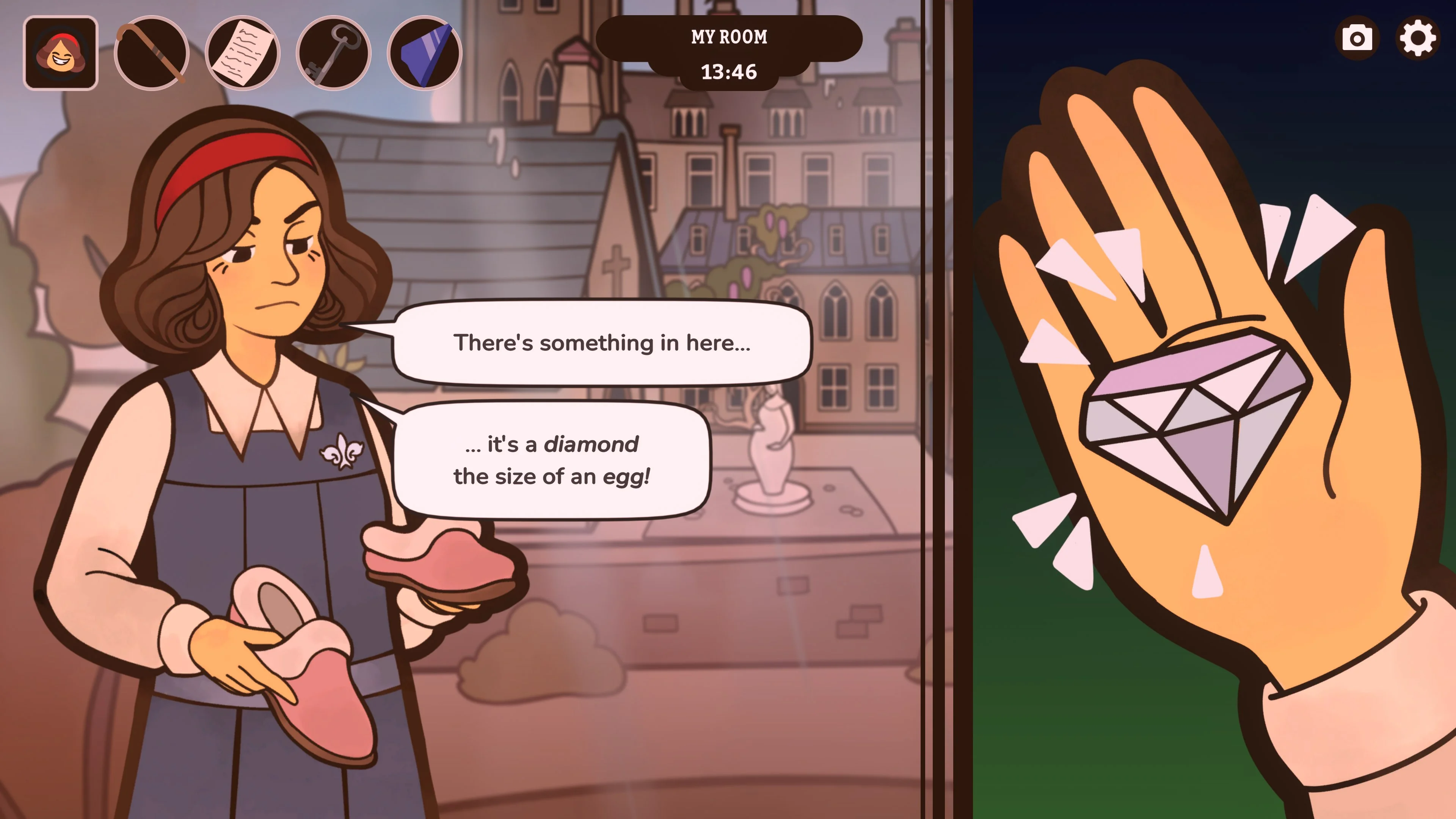
A manageable plan for your first school day
- Name the immediate problem. Write one sentence describing the accusation you are trying to answer. Leave speculative motives out of it.
- Choose one lead. Pick a person or place already raised by the game. Follow that lead until you learn something concrete or reach a clear obstacle.
- Record the source. Write “someone said” when that is all you know. Add the location or witness when you directly observe something.
- Check your own contribution. Note a lie, disclosure or conspicuous action you chose. It may explain a later reaction better than your theory about another character.
- Review at the end. Keep one unresolved question for another attempt. A short question is easier to test than a complete imagined reconstruction.
For a practice example unrelated to the plot, imagine one pupil says a room was empty while another says they heard voices there. “Someone is lying” is premature. Your next task is to establish whether they mean the same time. This is a reasoning exercise, not an event or answer from Expelled!.
How to approach the morality choices
Inkle describes a morality system that can open more ruthless choices. Treat that as a decision about the kind of route you want to explore, rather than a promise that the harshest option is automatically effective. Read what a response actually says before using it.
For a first attempt I recommend a consistent immediate goal: answer the accusation and find out who knows what. If curiosity about a particular relationship becomes more interesting, follow it deliberately and accept that you are testing a different objective. That is more useful than changing priorities after every surprising line.
When a run gives you a confusing result
Reconstruct the last relevant exchange from your notes. Separate what the game showed from what you expected. On another attempt, change one decision connected to that question and compare the consequence. Do not describe an untested route as a solution.
For another compact narrative mystery, see our Mystery Club catalogue. Official purchase links and platform information are on Inkle’s Expelled! page; screenshots here come from its downloadable release press kit.
For another Inkle mystery, our Overboard! beginner replay guide explains how to choose one question for a second attempt.
Official expelled promotional screenshot. Copyright remains with the game developer.
Comments