
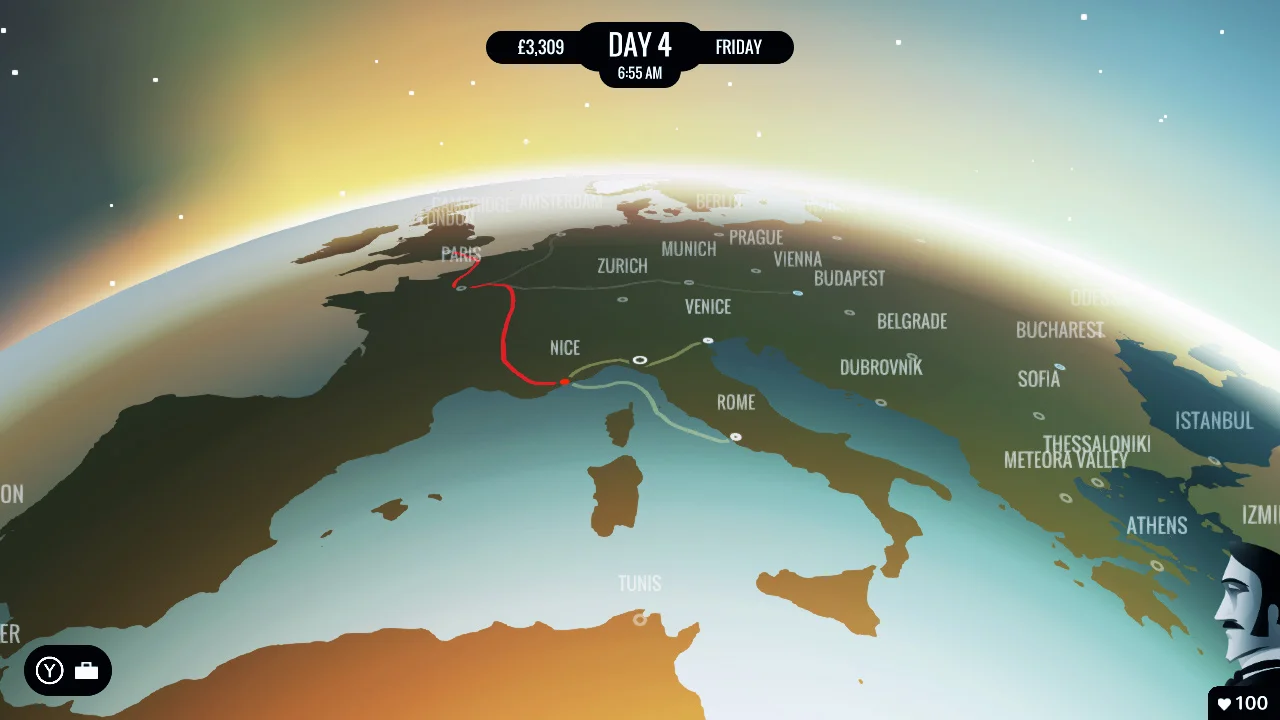
In 80 Days, a fast vehicle does not automatically produce a fast journey. You still need a useful connection, enough money to continue and a plan for the next city. Start by comparing the whole next leg, including the time before departure, rather than choosing the most impressive transport on the globe.
Inkle’s official game page describes a branching journey through an alternative 1872. You accompany Phileas Fogg around the world, choosing routes and encountering stories. This guide focuses on planning decisions without giving away a route, character outcome or ending.
Choose what this journey is for
I recommend treating your first attempt as a journey you want to understand, with the eighty-day wager as a useful constraint. You can pursue an interesting lead without expecting every choice to be optimal. If your immediate goal is a faster finish, be stricter about detours and review the next connection before committing.
That distinction matters because a memorable story and an efficient itinerary are different rewards. Decide which matters more when they conflict. A detour you deliberately choose is easier to assess than one you take because you never compared the alternatives.
Compare arrival time, not just travel time
Use the departure and journey information your current game provides. A connection that travels quickly can still arrive later if you wait longer to board. The following invented example explains the arithmetic; it is not a timetable from the game.
| Example connection | Wait before leaving | Travel time | Total until arrival |
|---|---|---|---|
| A | 1 day | 4 days | 5 days |
| B | 3 days | 3 days | 6 days |
| C | Available now | 6 days | 6 days |
Connection A wins this simplified comparison, despite having a longer journey than B. In your actual run, money, Fogg’s condition and the onward options may change the answer. Do not turn the example into a rule that the earliest arrival is always best.
Ask what a conversation could help you learn
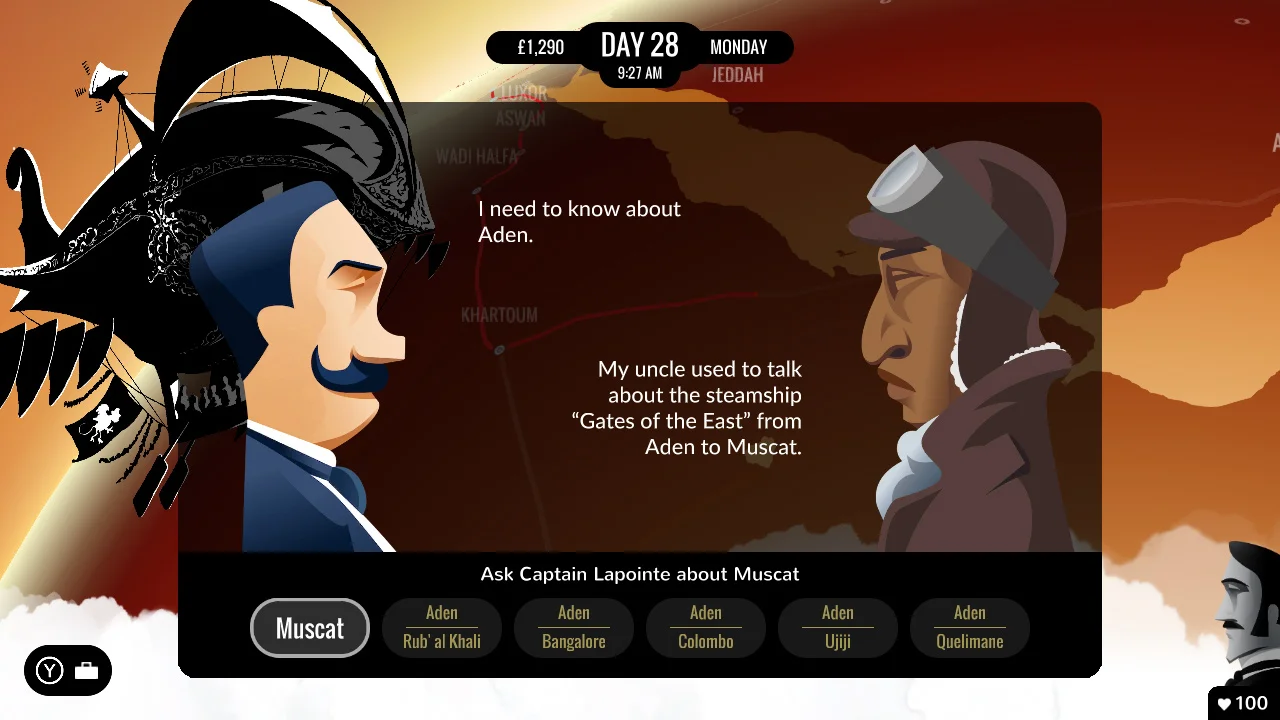
When a conversation offers travel information, read the place names carefully. A newly mentioned destination may be relevant to the next leg or to a later decision. Keep a short note if it changes your plan; there is no need to transcribe an entire exchange.
A practical note has three parts: what you learned, where it might help and what remains uncertain. “Ask about this destination when I reach the next hub” is more useful than a long quotation with no connection to your itinerary.
Check three resources before a commitment
In their development postmortem, inkle’s creators identify money, health and time among the journey’s core tracked values. Before choosing a departure, look at all three in your current game. Avoid planning as though the fare is the only cost that matters.
- Time: check the wait and journey together, then consider the next connection.
- Money: look at what remains after the immediate choice. A plan that spends everything needs an explanation for how you will continue.
- Condition: read Fogg’s current situation and the consequences described by the game, instead of assuming every journey is equally suitable.
- Alternative: identify the option you are declining and the reason. This makes later review possible.
Keep the next leg clear
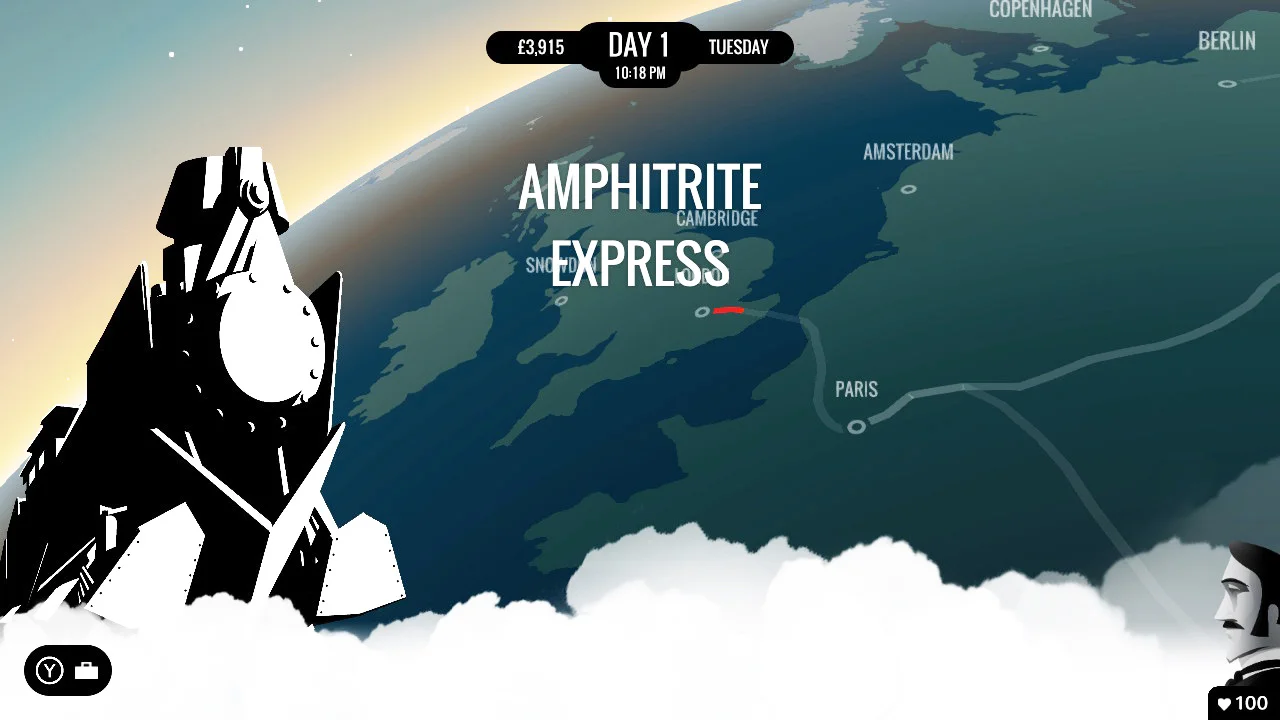
Planning the entire globe in detail can become wasted effort when a new opportunity changes the itinerary. I would keep the next leg concrete and later legs provisional. If you have already explored the relevant routes, a more detailed plan becomes useful.
After arriving, take a moment to compare the new situation with what you expected. Did a wait consume your margin? Did an interesting conversation change where you want to go? Update the plan before treating yesterday’s assumption as a fixed instruction.
Make a replay answer one question
After a finish or an unsuccessful attempt, choose one decision to revisit. You might compare two departures from the same city or investigate a lead you passed over. Changing everything at once makes it harder to understand which choice affected the result.
If you enjoy branching stories, our Overboard! replay guide offers a related way to plan an experiment without reading an ending in advance. For current platform links, use inkle’s official page. The images here come from its Nintendo Switch press screenshot set; your interface may differ.
Official promotional screenshot. Copyright remains with the developer.
Comments